Book soon Openers · Long Branch
Chain-Drive Opener Repair in Long Branch
The chain in the detached garage went orange with rust over the winter, the links are stiff, and the opener strains and groans to pull the door up. By afternoon, once the garage warms, it behaves almost normally.
Call now · open 24/7(289) 805-6879Right now
Before the door is looked at
Call (289) 805-6879, open 24/7.
Pull the release with the door fully closed whenever possible, and keep the opening clear as you do. Once the trolley lets go, the door is held by its springs alone, and a closed door can still shift unexpectedly.
Never raise the force setting to push a door through a frozen seal, a stiff track or a tired spring; force is set as low as reliably closes the door, and the reason the door is hard to move is fixed instead.
In plain words
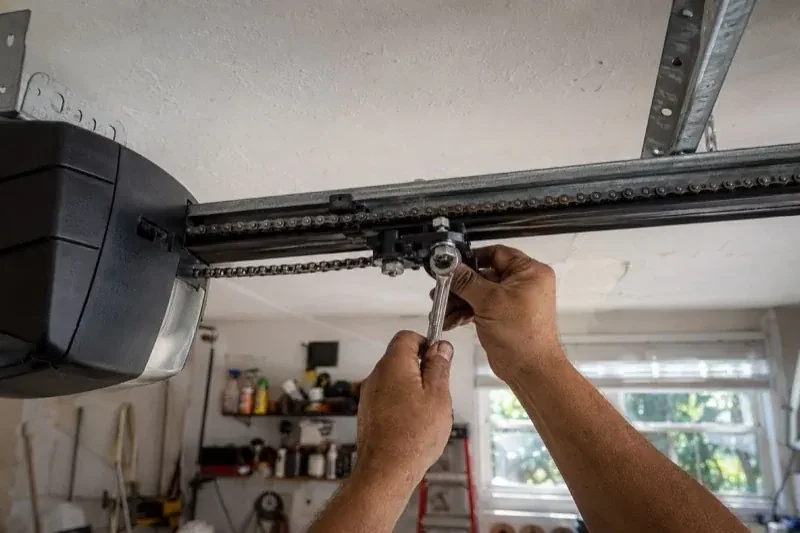
Cold is hard on a chain drive, and a detached or unheated garage shows it first. Grease on the rail and inside the gearbox thickens, a chain with surface rust stiffens link by link, and the operator strains against a door whose bottom seal may also be frozen to the slab. The result is a door that groans, stalls or reverses on the coldest mornings and works by afternoon. The repair frees or replaces a rusted chain, cleans and regreases the rail and gears, and sets force so the operator moves the door in the cold without being pushed past its safety limit.
How the visit goesPress the button and the opener hums for a second, then quits. The trolley is jammed hard against a bolt at the very end of the rail near the motor and will not budge in either direction.
Chain-Drive Opener Repair · Long Branch
How the visit goes
- 1
Where the door stops and how hard it pushes
Two settings on the head decide the door's behaviour, and both are checked against what the door is doing. Travel limits set where the door stops in each direction; a door that stops shy of the floor, reverses on touching it or opens partway is out of adjustment. Force sets how much effort the operator treats as normal; too little and the door reverses for no reason, too much and the operator stops noticing an obstruction. The technician notes the current screw positions or the learned values, watches a full cycle and compares what the door does with what the settings say, before deciding whether the fault is in the drive parts or only in the settings.
- 2
Proving the reversal before the job is finished
No chain-drive repair ends without the reversal tests, because every adjustment to tension, limits or force can change how the operator senses an obstruction. A 38 mm block, or a 2x4 laid flat, is placed on the floor under the centre of the door and the door is closed from the wall control; on touching it the door must stop and return to fully open. The door is closed again while an object is passed through the photo-eye beam, and it must reverse the same way. Any hesitation sends the technician back to the force setting or the sensors, and the tests are repeated until both pass in front of you.
- 3
Balance is what protects the new gear
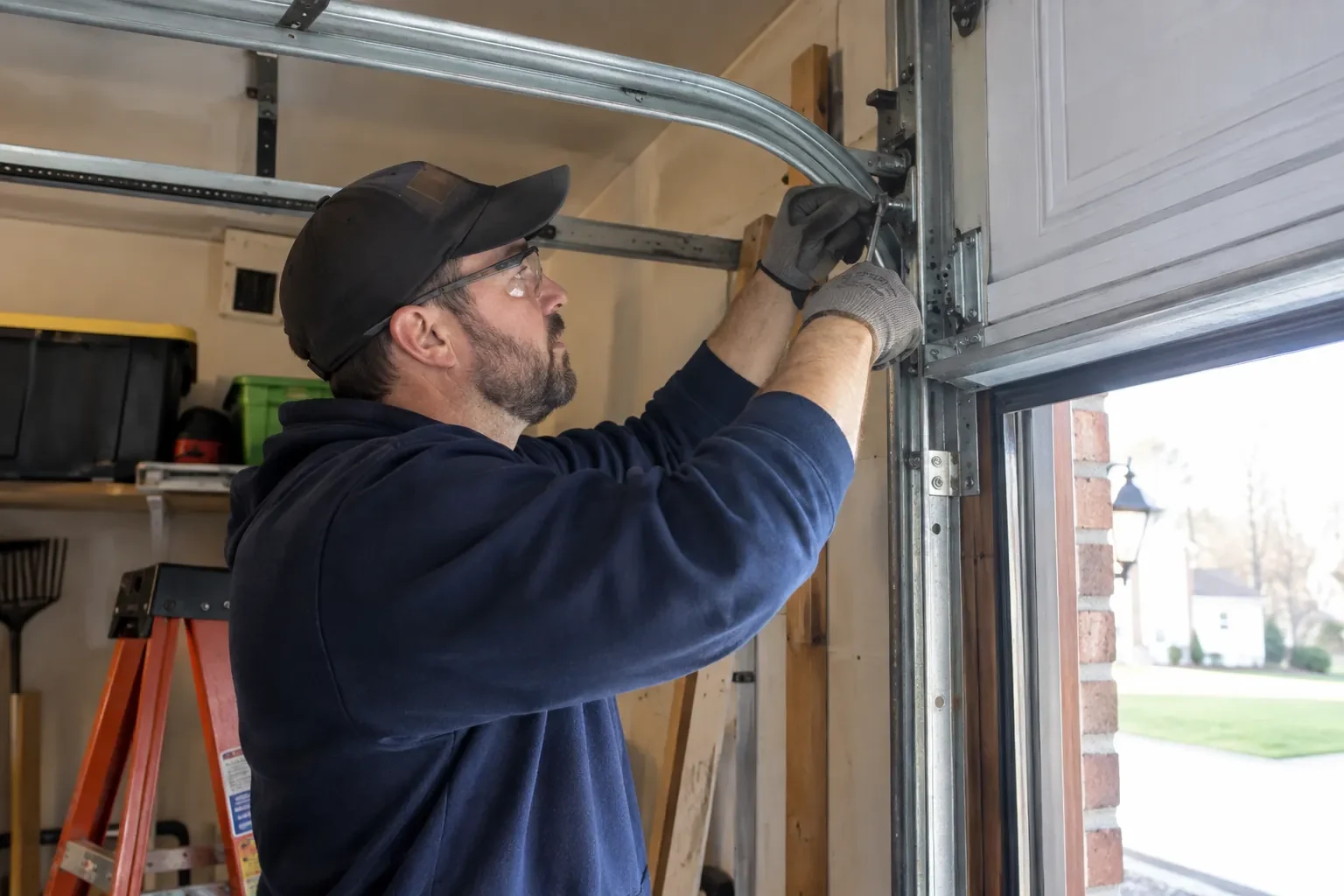
The drive gear that was replaced can wear out when it is asked to lift more than the chain should carry, though binding or wear elsewhere in the drive can share the blame. Keeping the load honest starts with the door's balance. Each season, with the door closed, pull the red release, lift the door by hand to about a metre and let go; it should stay put. If it sinks or creeps upward, the springs have drifted and a spring adjustment is due before the operator starts working harder to compensate. Reconnect by running the operator until the trolley picks up the arm. This one check does more for the gearbox than anything else you can do.
In the van
- Drive gear and worm gear kit
- Idler sprocket or pulley
- Cold-rated garage door lubricant
- Sprocket and shaft assembly
- Roller chain with master link
What affects the quote
- 1
Door work found at the balance check
If the door is heavy or drops when lifted by hand, spring adjustment or replacement is quoted as door work in its own right, ahead of the drive repair that depends on it.
- 2
Rail hardware and hangers
Loose hangers, a header bracket that has pulled from the framing, or splice plates that need renewing add fasteners, angle iron and time on the ladder to a job that might otherwise be an adjustment.
- 3
Ceiling height and access
A head hung from a high or cathedral ceiling, or a rail boxed in by storage racks, a lift or ductwork, takes longer to reach and work on than one under a standard joist with a clear floor.
Same fees day, night or weekend.
Chain-Drive Opener Repair: questions
Why does the door open only partway and stop?
Three causes account for most cases. The up travel limit has drifted short and needs turning out. The door has become heavy or stiff somewhere in its travel, so the operator senses resistance and stops, which points to the springs, rollers or track. Or the chain has slipped out of phase with the motor, in which case the limit screws have no effect and the chain must be re-set on the sprocket with the trolley at the closed position.
How much slack should the chain have?
It is a measurement, taken with the door closed and disconnected from the trolley. At the middle of the rail the chain should sit at the height the opener's own manual specifies for its rail shape, since the figure is not the same across makes. The two nuts on the trolley set and lock it. With the door reconnected and closed, some droop appears; that is expected as long as the measurement returns when the door is open.
My opener is decades old. Can the chain drive still be repaired?
Often, yes. Gear kits, sprockets, chains and trolleys are still made for many older heads, and tension, phase and limits can be set on almost any unit. The limit is parts: some makers no longer support units made before the mid-1990s, and those also lack the photo-eye protection expected today. The technician checks parts availability for your model and lays out repair beside renewal so you can decide with the facts.
Openers & Access
Bigger photo, sooner job: Emergency Book soon Plan ahead
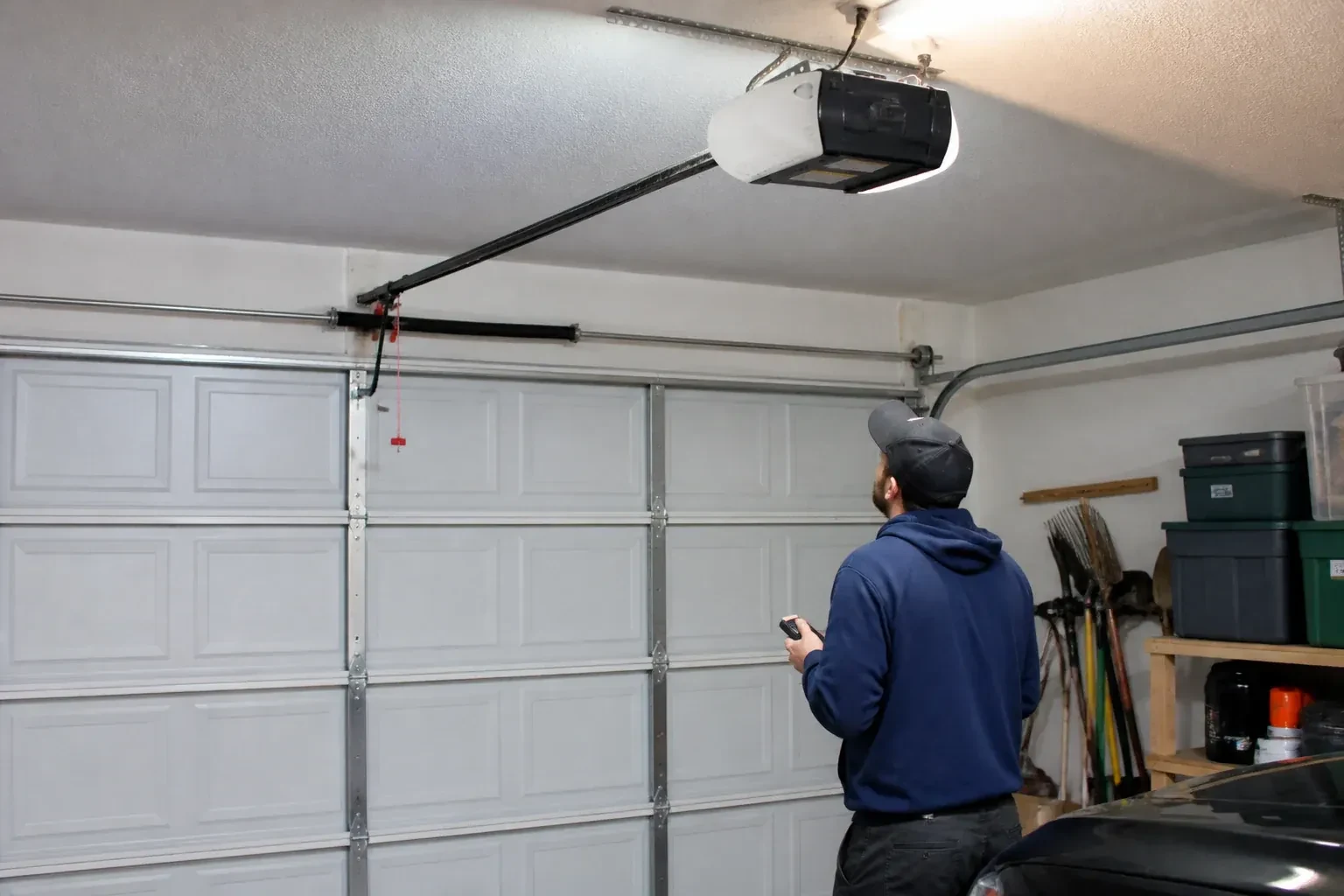 Book soonGarage Door Opener Diagnosis and RepairYou press the remote from the driveway and hear the motor hum overhead, a steady drone with no movement behind it.
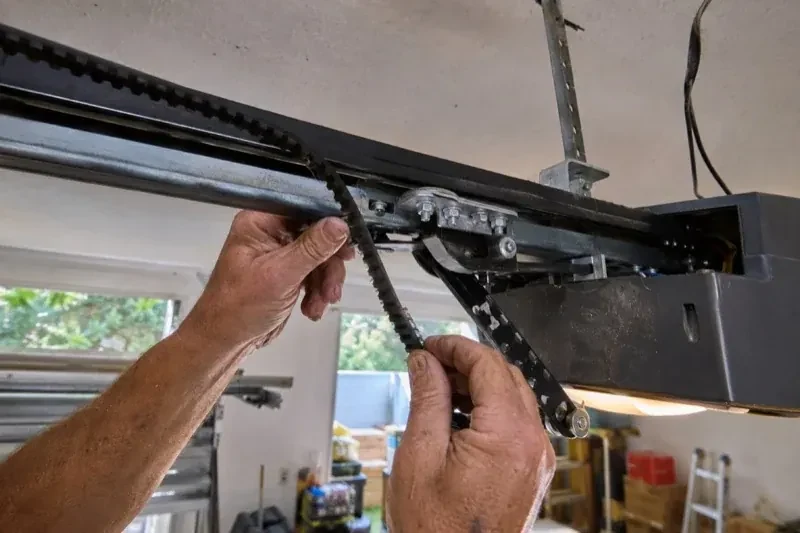 Book soonBelt-Drive Opener RepairIt is minus twenty in the detached garage and the door climbs in jerks, the belt stiff as a board.
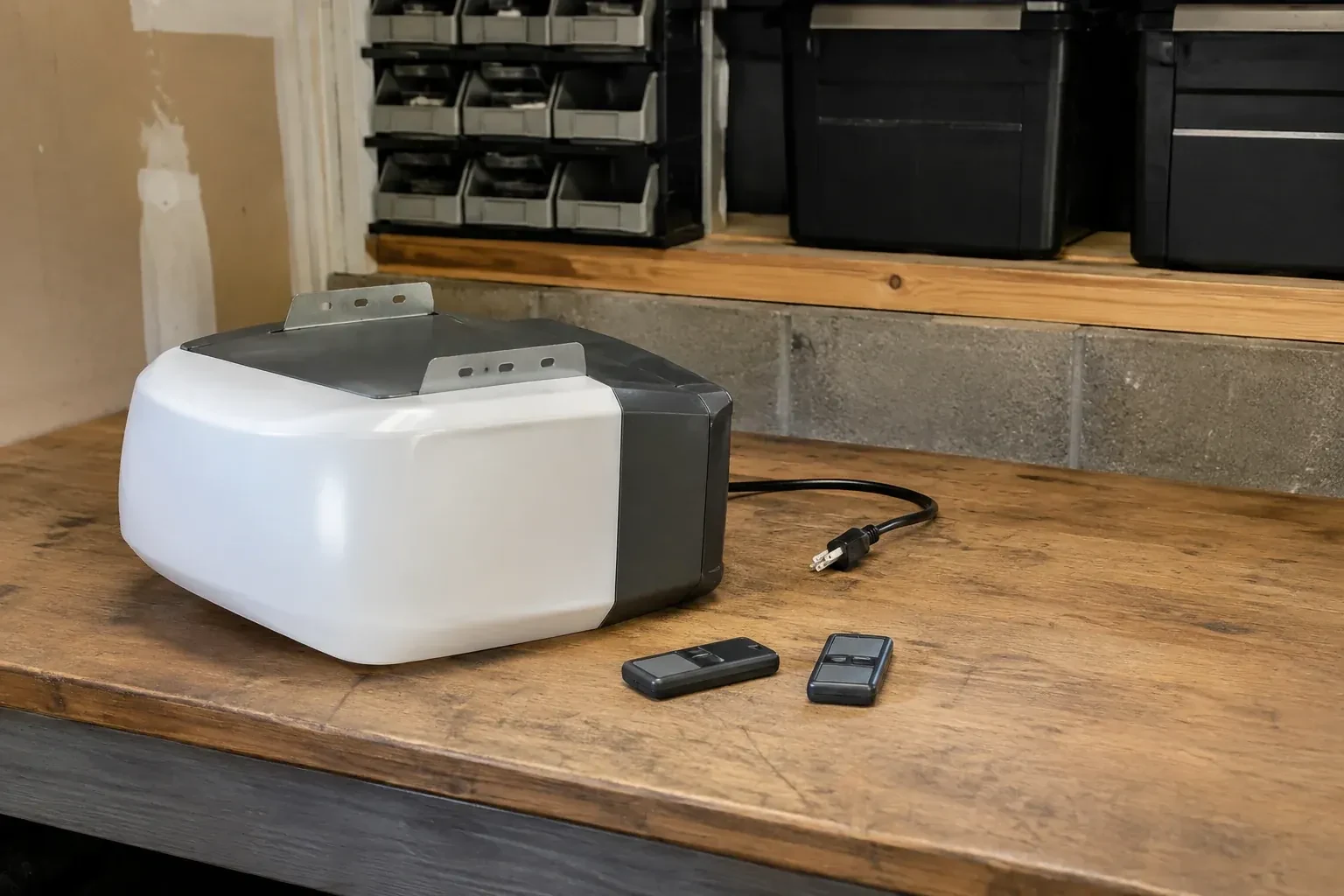 Plan aheadGarage Door Opener Replacement
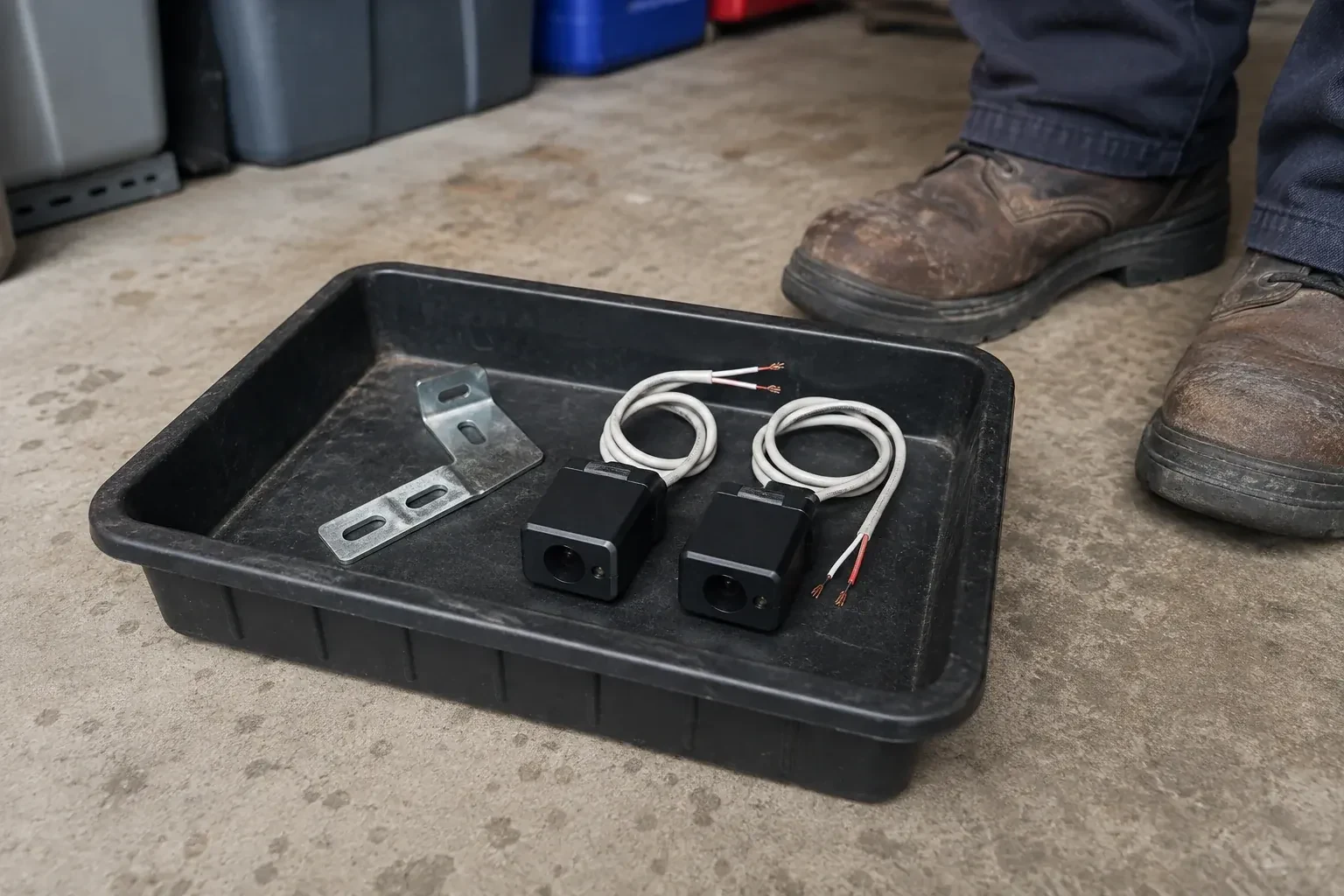 Book soonPhoto-Eye Sensor Alignment or ReplacementSince shelving went up along the garage wall, the door will not close and both sensor lights are dead.
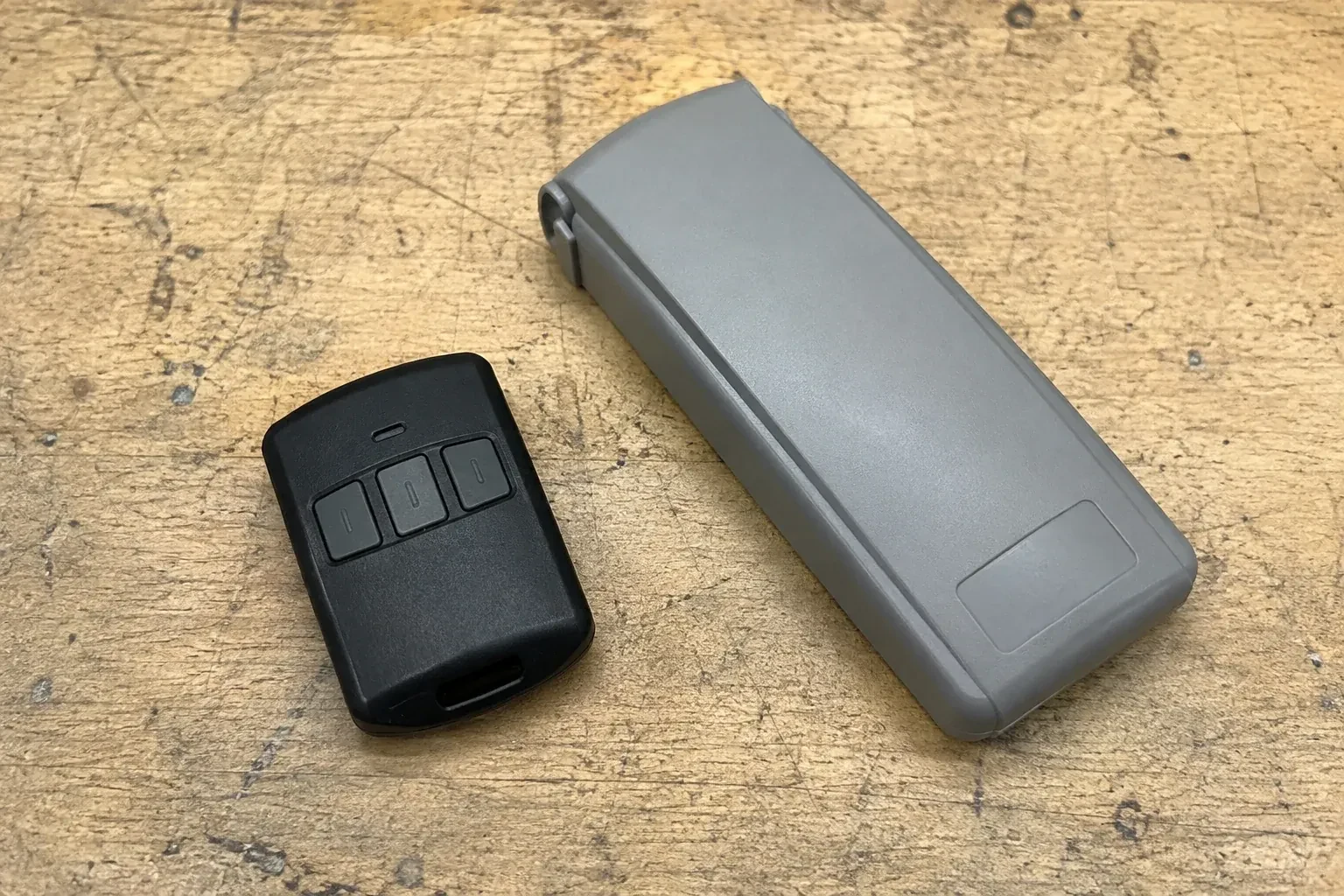 Plan aheadGarage Door Remote and Keypad Programming
Chain-Drive Opener Repair near you
Toronto, Ontario
Long Branch information
- Town
- Long Branch, Toronto, Ontario
- In business
- 15 years
- Hours
- Open 24/7 · nights, weekends and holidays, same fees
- Phone
- (289) 805-6879
- Visits
- On-site assessment preferred. Request a visit or call.
What the census means at the door
58%
Older homes. About 58% of homes in Toronto were built in 1980 or earlier, according to the 2021 Census.
Older houses frequently have a garage door that was replaced once already, sometimes with a door chosen for the opening rather than the building. When that door reaches its end, there is a chance to pick a style that suits the house properly, and we measure with that in mind.
23%
Single-detached houses make up about 23% of homes in Toronto (2021 Census).
Attached housing frequently has tandem or tight garages with limited headroom and little side room, so replacement openers and tracks are chosen to fit those dimensions. A low-headroom track kit or a wall-mounted jackshaft opener often solves what a standard unit cannot.
Open 24/7
Request a visit
The chain in the detached garage went orange with rust over the winter, the links are stiff, and the opener strains and groans to pull the door up.
Call now · open 24/7(289) 805-6879- On-site assessment preferred
- Same fees day, night or weekend
- 15 years in business