Plan ahead Repairs · Long Branch
Garage Door Safety Inspection in Long Branch
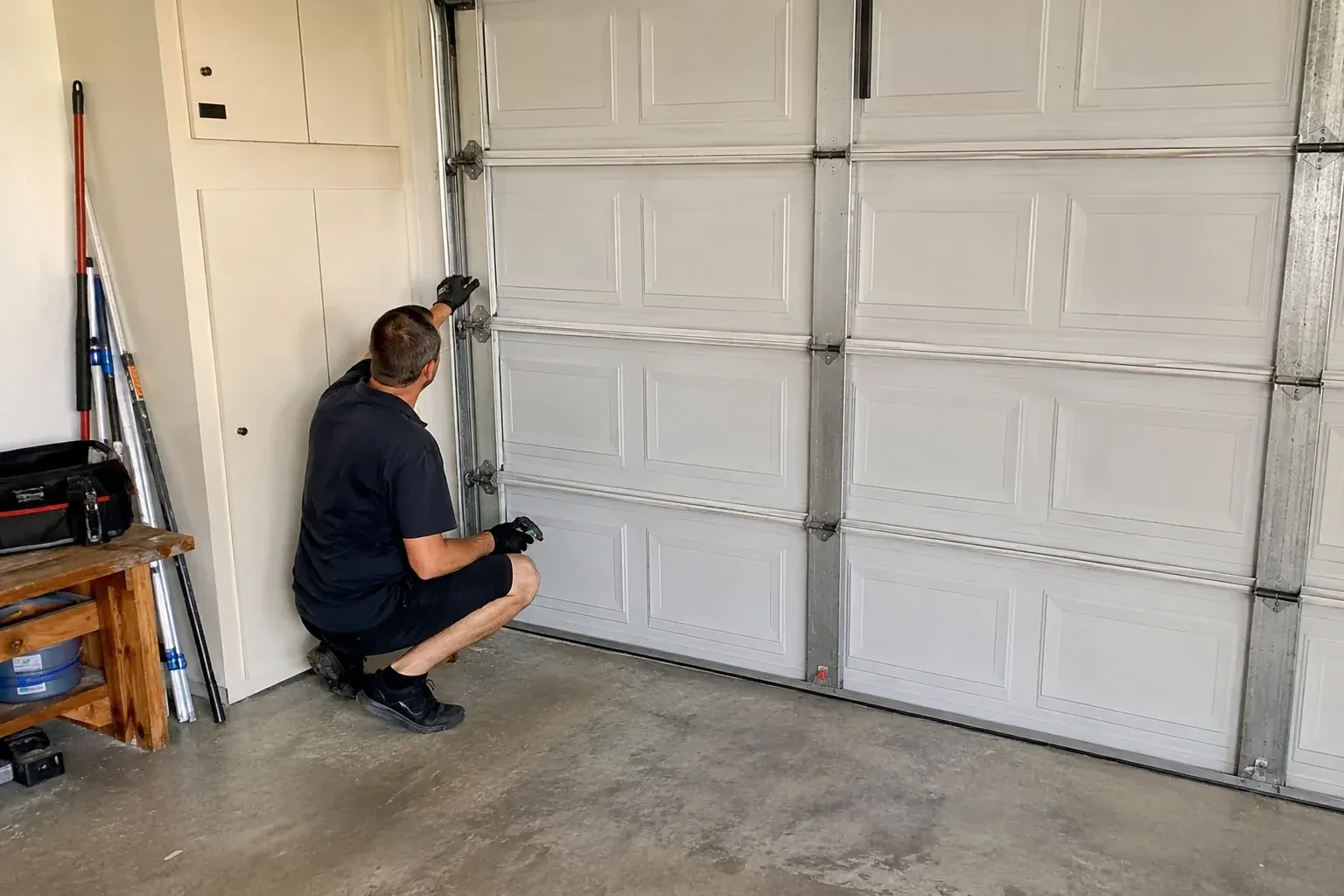
Backing out in a hurry, the bumper tapped the bottom section. The dent is small and the door still runs, but it seems to shudder now at the point where the panel meets the track.
Call now · open 24/7(289) 805-6879In plain words
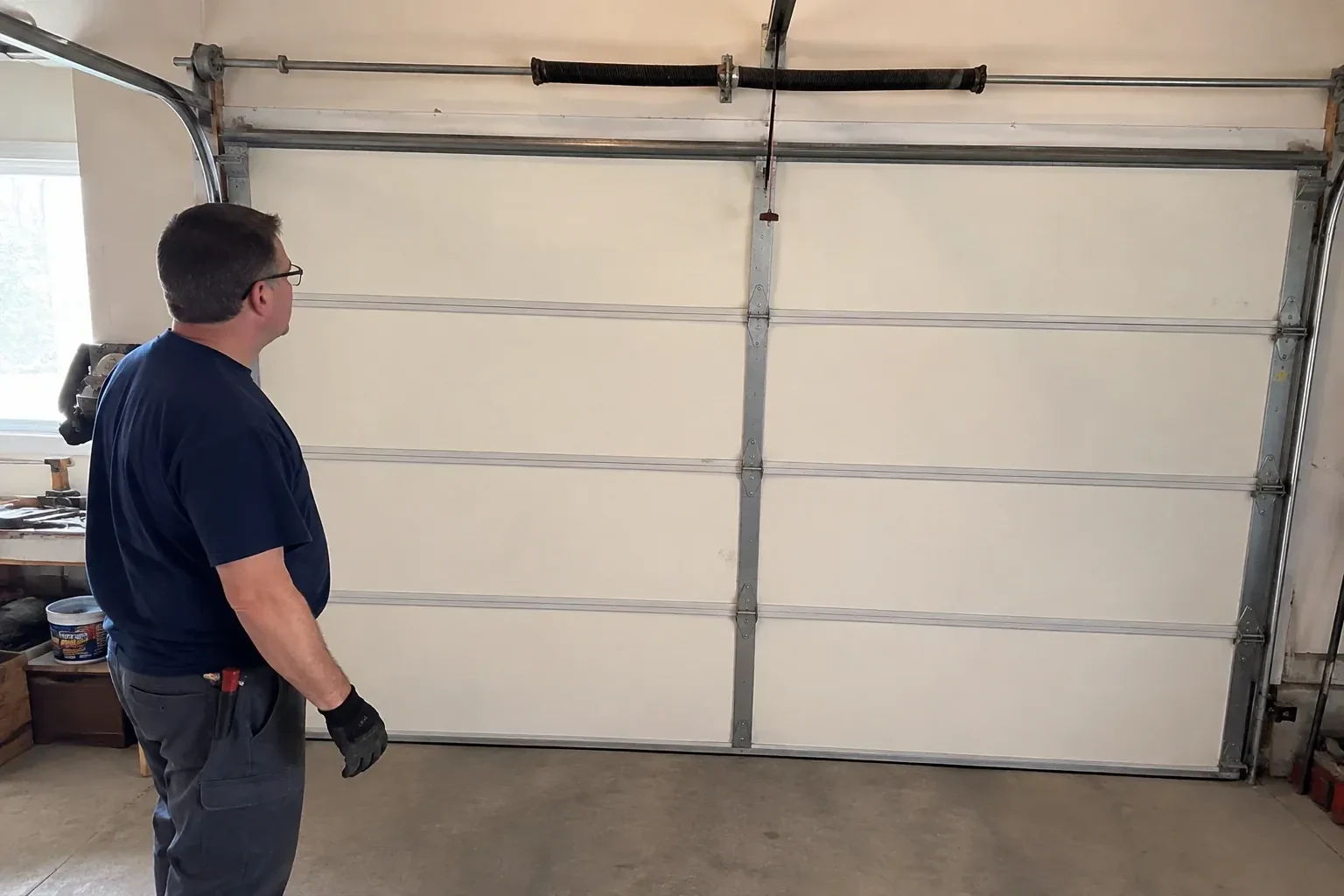
After a vehicle or an object has hit the door, an inspection follows the force rather than the dent. A bump on the bottom section can nudge a track out of plumb, shift a roller, bend a bracket, or leave one cable seated differently on its drum, and each changes how the door hangs and how the springs share its weight. The technician traces the load path from the point of impact through the hinges, rollers, tracks, cables and counterbalance to the opener attachment, and reports whether the mark is cosmetic, whether a section or piece of hardware needs work, or whether the door has moved out of balance.
How the visit goesYour toddler has discovered the wall button. You want to know, from someone who checks these things for a living, that the door will stop and reverse if a small person is under it.
Garage Door Safety Inspection · Long Branch
How the visit goes
- 1
Watching one full cycle under power
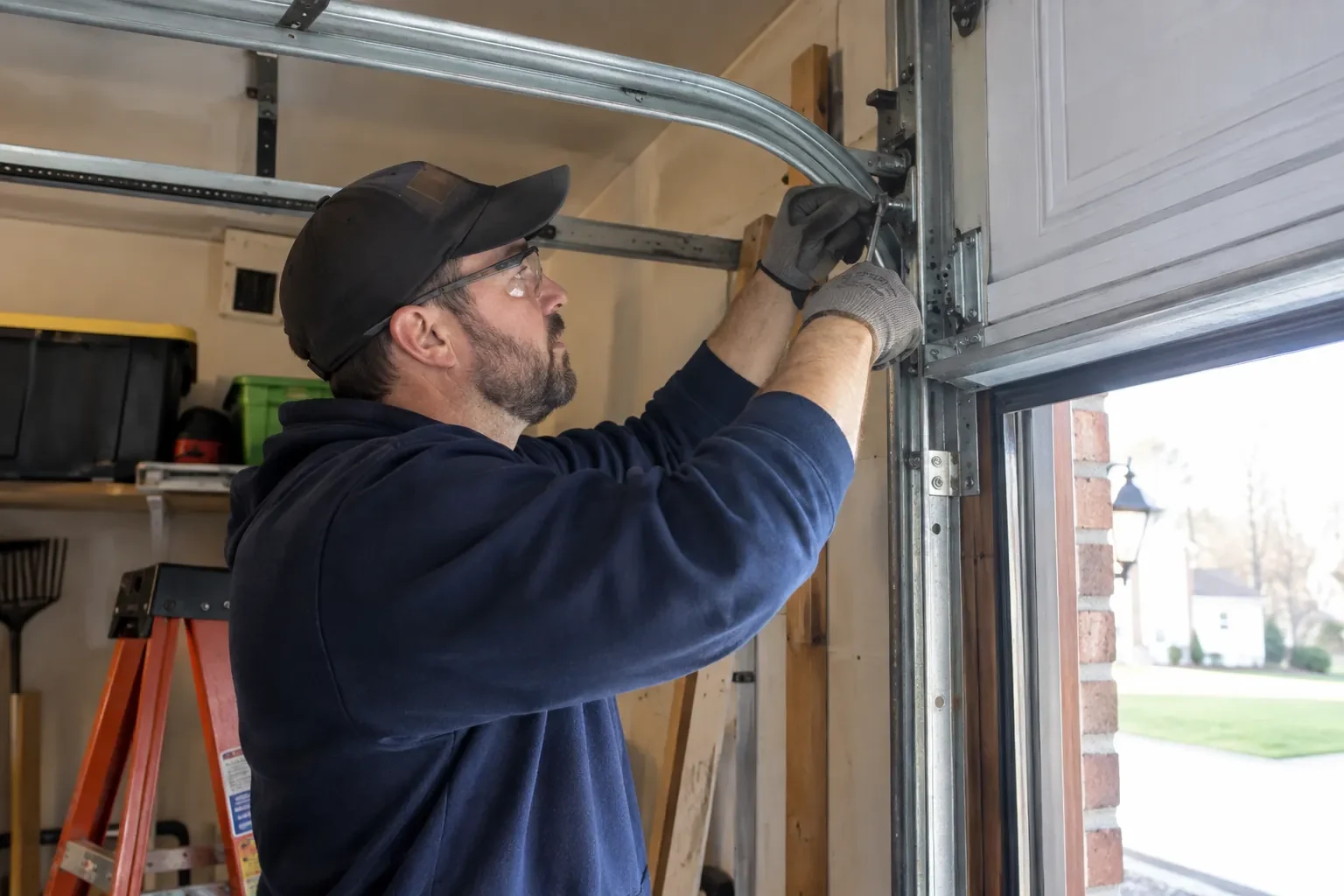
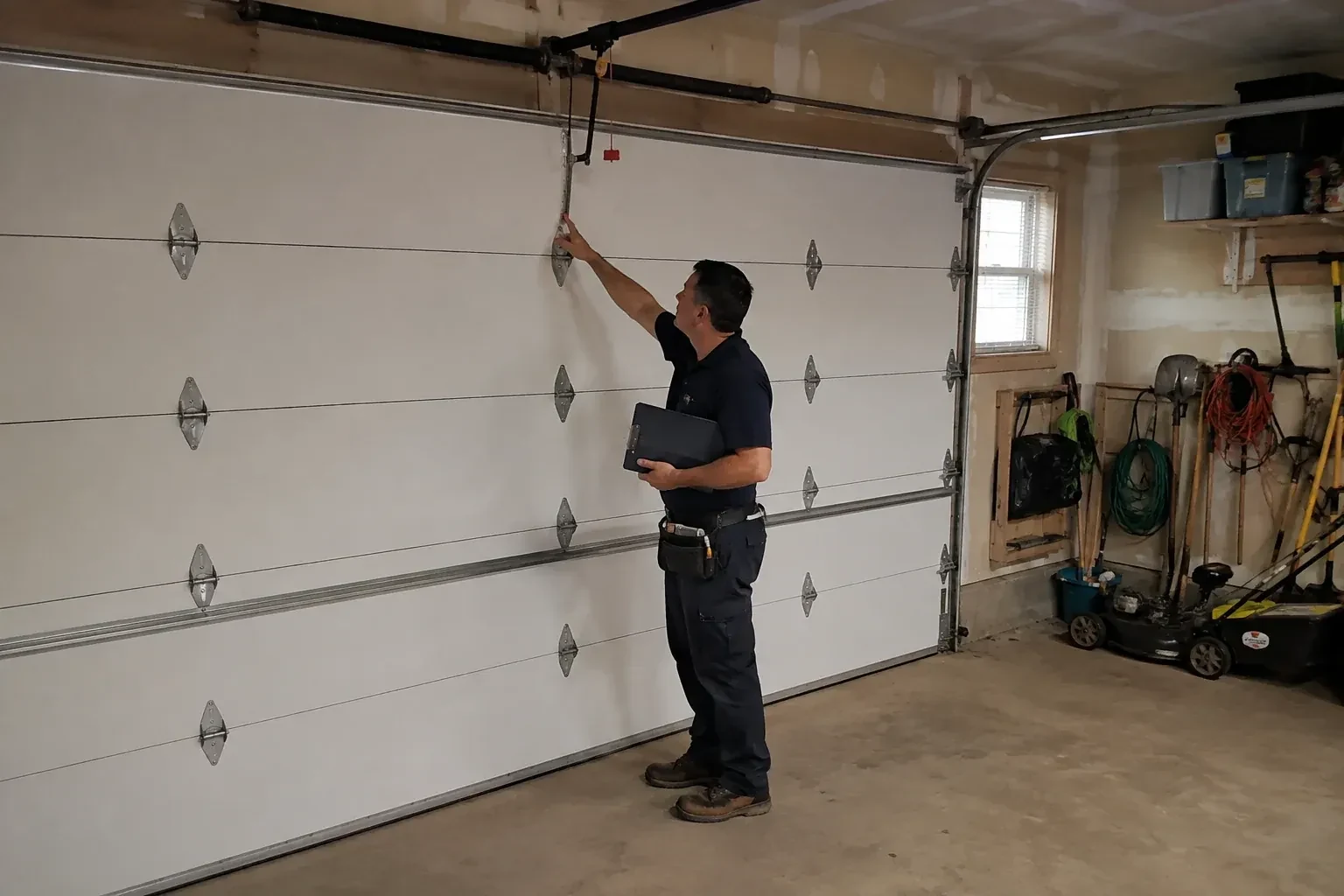
Before anything is measured, the technician stands back and runs the door through a full open and close, listening as much as watching. A healthy door sounds even from bottom to top; a knock at the turn into the horizontal track, a squeal at a particular hinge, a grinding drum or a motor that changes pitch under load each point somewhere specific. The eyes follow both bottom corners to see whether they leave the floor together, the top section as it passes the curve, and the final inch of closing, where the door should settle onto its seal without a thud. This one cycle often tells the technician where to spend the rest of the visit.
- 2
Checking the photo eyes
The photo eyes are the pair of small sensors low on each track that watch the opening with an invisible beam. The technician confirms they are mounted at the height the opener maker specifies, aligned so the indicator lights hold steady, clean of grime and frost, and wired securely. Then, with the door closing, the beam is broken with an object; the door should reverse before it reaches anything. A sensor that has been knocked out of line, wired loosely or blinded by low sun explains a great many doors that refuse to close on some afternoons, and the fix is often alignment and a wipe of the lens, done on the spot.
- 3
Carrying the door through winter
The technician leaves you with the handful of habits that matter in a cold climate. Keep the threshold clear of packed snow so the door closes on the floor and not on a ridge of ice. On a mild day, wipe the salt off the bottom brackets, the lowest hinges and the bottom stretch of each cable, then give them a light mist of lubricant. Wipe the photo-eye lenses when the grime of a slushy week builds up. If the bottom seal freezes to the slab, free it by hand before running the opener rather than asking the motor to tear it loose. These take minutes across a season and spare the cables, the seal and the opener.
In the van
- Inspection checklist and report form
- Flat 2x4 test board
- Socket set and nut drivers
- Spring and cable gauges
- Camera for findings
What affects the quote
- 1
An impact to trace
After a vehicle or object has hit the door, the technician follows the force through the hardware and photographs each point, which is a deeper assessment than a routine check.
- 2
Manuals and unusual models
A door or opener with no label, a discontinued model or a custom lift setup means the test procedure has to be established rather than looked up, which adds time.
- 3
Findings that change the scope on the day
If a stop-use item turns up, securing the door and explaining the correction takes extra time on the visit. That, and any work you approve, is quoted separately before it starts.
Same fees day, night or weekend.
Garage Door Safety Inspection: questions
How often should a garage door be inspected?
Once a year suits most households, and early spring, after the salt and freeze-thaw season, is a natural time. A door that opens many times a day, an older door, or one on a rental where nobody watches it closely does well with a look each season. Between visits, the monthly balance, reversal and photo-eye checks that industry guidance recommends catch most changes early.
How long does the visit usually take?
Plan for roughly an hour for a single door in ordinary condition, and longer for a double door, a second door on the property, or a door with a history that needs following up. Maintenance done on the spot adds a few minutes. A post-impact assessment, where the technician traces the force through the hardware, takes longer than a routine check. You are told at the door if the scope is growing.
Why does my door reverse on the way down for no reason?
Most often it is the photo eyes. A sensor knocked slightly out of line, a lens with a film of road grime, a loose wire, or low afternoon sun shining straight into one eye will each break the beam as far as the opener is concerned. The next candidates are a down-force setting that has drifted, a binding roller or a door that has gone out of balance. The inspection checks each in turn.
Repair & Maintenance
Bigger photo, sooner job: Emergency Book soon Plan ahead
 Plan aheadGarage Door Tune-Up
 EmergencyOff-Track Garage Door ResetThe door came down fine but with a scraping noise, and now the vertical track on one side is bowed away from the wall.
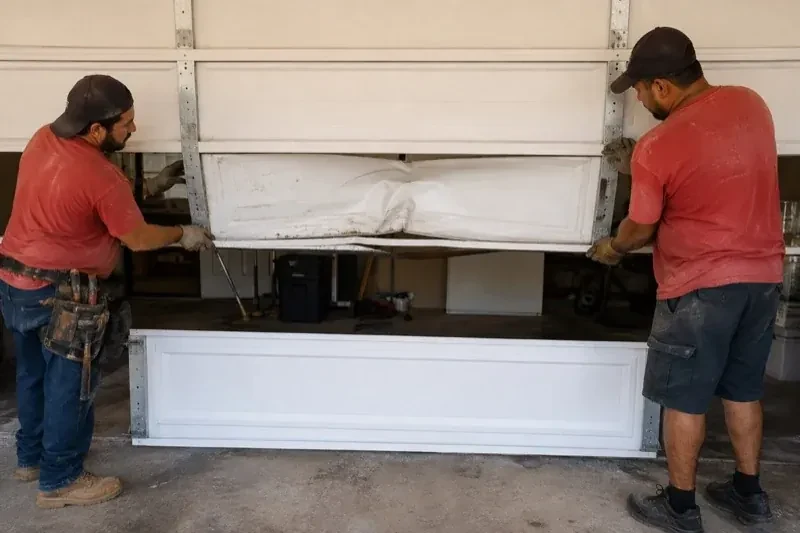 Book soonGarage Door Panel ReplacementAfter an overnight freeze the door stuck to the slab, the opener strained, and something gave.
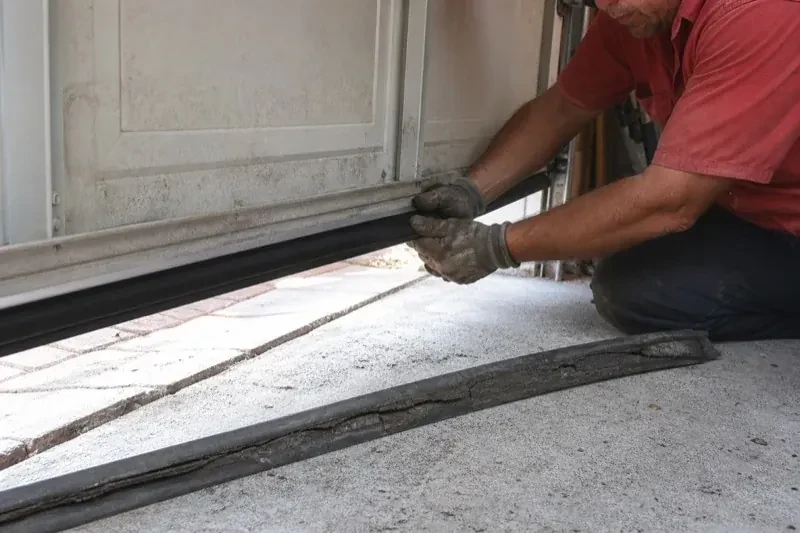 Plan aheadGarage Door Bottom Seal Replacement
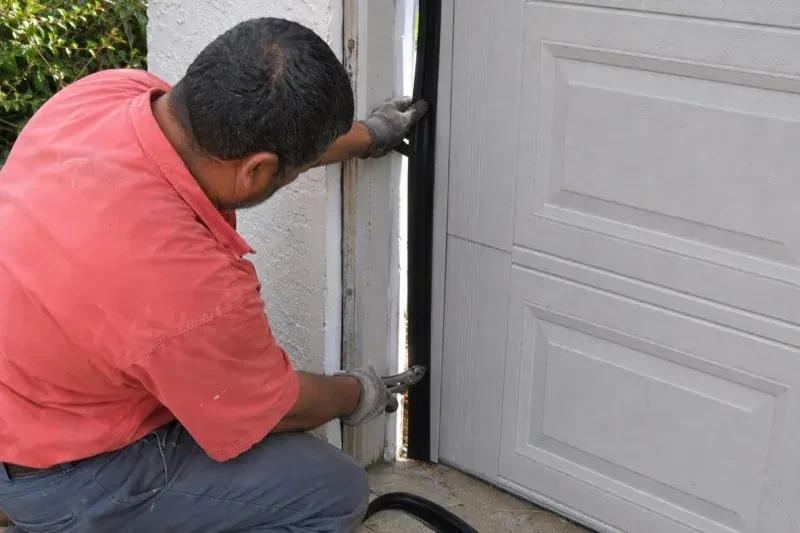 Plan aheadGarage Door Perimeter Weatherstrip
Garage Door Safety Inspection near you
Toronto, Ontario
Long Branch information
- Town
- Long Branch, Toronto, Ontario
- In business
- 15 years
- Hours
- Open 24/7 · nights, weekends and holidays, same fees
- Phone
- (289) 805-6879
- Visits
- On-site assessment preferred. Request a visit or call.
What the census means at the door
58%
Older homes. About 58% of homes in Toronto were built in 1980 or earlier, according to the 2021 Census.
Older houses frequently have a garage door that was replaced once already, sometimes with a door chosen for the opening rather than the building. When that door reaches its end, there is a chance to pick a style that suits the house properly, and we measure with that in mind.
23%
Single-detached houses make up about 23% of homes in Toronto (2021 Census).
Attached housing frequently has tandem or tight garages with limited headroom and little side room, so replacement openers and tracks are chosen to fit those dimensions. A low-headroom track kit or a wall-mounted jackshaft opener often solves what a standard unit cannot.
Open 24/7
Request a visit
Backing out in a hurry, the bumper tapped the bottom section.
Call now · open 24/7(289) 805-6879- On-site assessment preferred
- Same fees day, night or weekend
- 15 years in business